Writing with AI
Why Every AI Story Generator Breaks at Chapter Three — and the Fix Nobody Is Selling

Self-published thriller author who treats every book like a product, not a lottery ticket.
There is a moment every writer who has seriously used an AI story generator will recognise.
Chapters one and two are a revelation. The prose is clean, the pacing is brisk, the machine seems to understand. Then somewhere in chapter three the floor tilts. A character explains something they already explained. A location gains a staircase it did not have. The tone slides half a degree towards a generic register that belongs to no book in particular. Nothing is catastrophically wrong. Everything is slightly wrong.
This is not a bug in one product. It is a structural property of how AI story generation works, and no amount of prompt-craft fully removes it. Understanding why is the most useful thing a writer can learn about this technology in 2026 — because once you see the mechanism, the fix becomes obvious, and it is not the fix the market is selling you.
The mechanism: plausibility is not continuity
A language model powering an ai story generator does one thing extraordinarily well: it predicts what text most plausibly comes next, given everything it can currently see.
Two words in that sentence are doing enormous damage.
"Plausibly." The model optimises for text that reads like good writing. It has no representation of your book as an object with facts in it. When it writes "her grey eyes narrowed," it is not consulting a record; it is producing a sentence that fits. Grey is plausible. So is hazel. So, honestly, is green. An ai story generator has no reason to prefer the one you used in chapter two, because nothing in the training objective rewards bookkeeping — only fluency.
"Currently see." Attention is finite and it is not uniform. Even with an enormous context window, material in the middle of a long document gets weighted less than material at the edges. Your chapter-two eye colour is not forgotten so much as diluted — one detail competing with two hundred thousand others, none of them flagged as load-bearing. The model does not know that eye colour is a fact and "the light was thin" is atmosphere. To the ai story generator, they are the same kind of token.
Put those together and you get the defining limitation of the category: an AI story generator is a superb sentence-level writer and a poor book-level accountant.
Why bigger context windows did not fix it
The obvious rebuttal is that context windows keep growing, so this problem solves itself. It has not, and it will not, for a reason that is easy to demonstrate.
Give any ai story generator a 90,000-word manuscript entirely inside its window and ask it to write chapter twenty-one. It will produce fluent, on-tone prose. Now ask it a different question: list every promise made to the reader in the first act that has not yet been paid off. Watch what happens. You will get a plausible-looking list that is partly real, partly invented, and missing several genuine items — with no signal about which is which.
That failure is diagnostic. Generating text and auditing text are different tasks with different success criteria. Generation rewards fluency; auditing rewards exhaustiveness and precision. A system tuned for the first will not spontaneously become good at the second just because it can see more tokens. Scale improves the prose. It does not install a ledger.
This is the gap that every "just use a bigger model" answer walks straight past — and it is the gap StoryWith AI was built to sit in.
The five failure modes of a long-form AI story generator
Name a problem and you can hunt it. Here are the five that show up, in rough order of how often they sink a manuscript.
1. Attribute drift
The classic. Eye colour, height, a limp, a sibling's name, a car, the season. Individually trivial; collectively they are the reason a reader stops believing the world is real. Attribute drift is almost never caught by rereading, because the writer's memory supplies the correct value automatically. You cannot proofread your way out of it. You need something that compares chapter nine against chapter two mechanically.
2. The unpaid promise
Chekhov's gun, in reverse. An ai story generator loves to introduce texture — a locked drawer, an overheard name, a scar with a history. Texture is cheap to generate and expensive to honour. Two hundred pages later the drawer is still locked and the reader, who has been quietly holding that thread the whole time, feels cheated. Readers forgive slow chapters. They do not forgive being promised something and never paid.
3. Scenes that do not earn their place
This is the subtlest and the most dangerous, because the prose is good. A model can write a genuinely lovely scene in which nothing changes: no information moves, no relationship shifts, no decision is made. Human writers produce these too, but rarely at volume. An ai story generator produces them effortlessly, and their surface quality is exactly what stops you cutting them.
4. Dialogue monoculture
Ask an ai story generator for a conversation between four characters and read it aloud. Frequently, all four have the same rhythm — same sentence length, same wit level, same willingness to answer the question asked. Distinct voices come from distinct withholding patterns: who deflects, who over-explains, who lies by omission. Generation defaults to clarity, and clarity flattens character.
5. The measurable sag
Pacing collapse in the middle third. It happens in hand-written manuscripts too, but AI-assisted drafts reach the middle faster, which means the sag arrives before the writer has developed the instinct to feel it. What is useful here is that pacing and emotional arc are measurable — scene-by-scene tension, information density, time-in-scene. Guessing about your middle act is optional now.
Every AI story generator only builds half a loop
Step back and the shape of the problem is clear. Almost every product marketed as an ai story generator implements exactly one half of a two-half process:
Generate → ?
The missing half is verification. In every other creative-technical discipline this is obvious. Developers do not ship code because it compiled; they run tests. Photographers do not deliver a shoot because the shutter fired; they cull and grade. Only in AI writing did an entire product category ship the ai story generator and leave the author to do the auditing by hand, at 3 a.m., with no instrumentation.
StoryWith AI's core design decision is to close that loop:
Generate → Diagnose → Prioritise → Test → Revise → Pitch
Each arrow is a product surface, not a slogan.
Diagnose. Analyzers run over the whole manuscript, not a window of it: continuity, coverage (setup to payoff), dependencies, readability, dialogue, scene purpose. Fiction gets character and timeline logic; non-fiction gets argument mapping, evidence checks and source management with APA, MLA and Chicago export. Every finding links to the exact scene that produced it.
Prioritise. The Action Engine merges every finding into one ranked inbox, scored by severity, confidence and effort. This is the product's centrepiece and its real answer to overwhelm. Twelve analyzers producing 180 findings is not help; it is a second job. One list, ordered, is help.
Test. AI reader personas react as a defined reader type would. Real beta readers respond through a private link with no signup. Then calibration compares the two — the AI's predictions measured against actual human reactions, so you learn where the machine is reliable and where it is not.
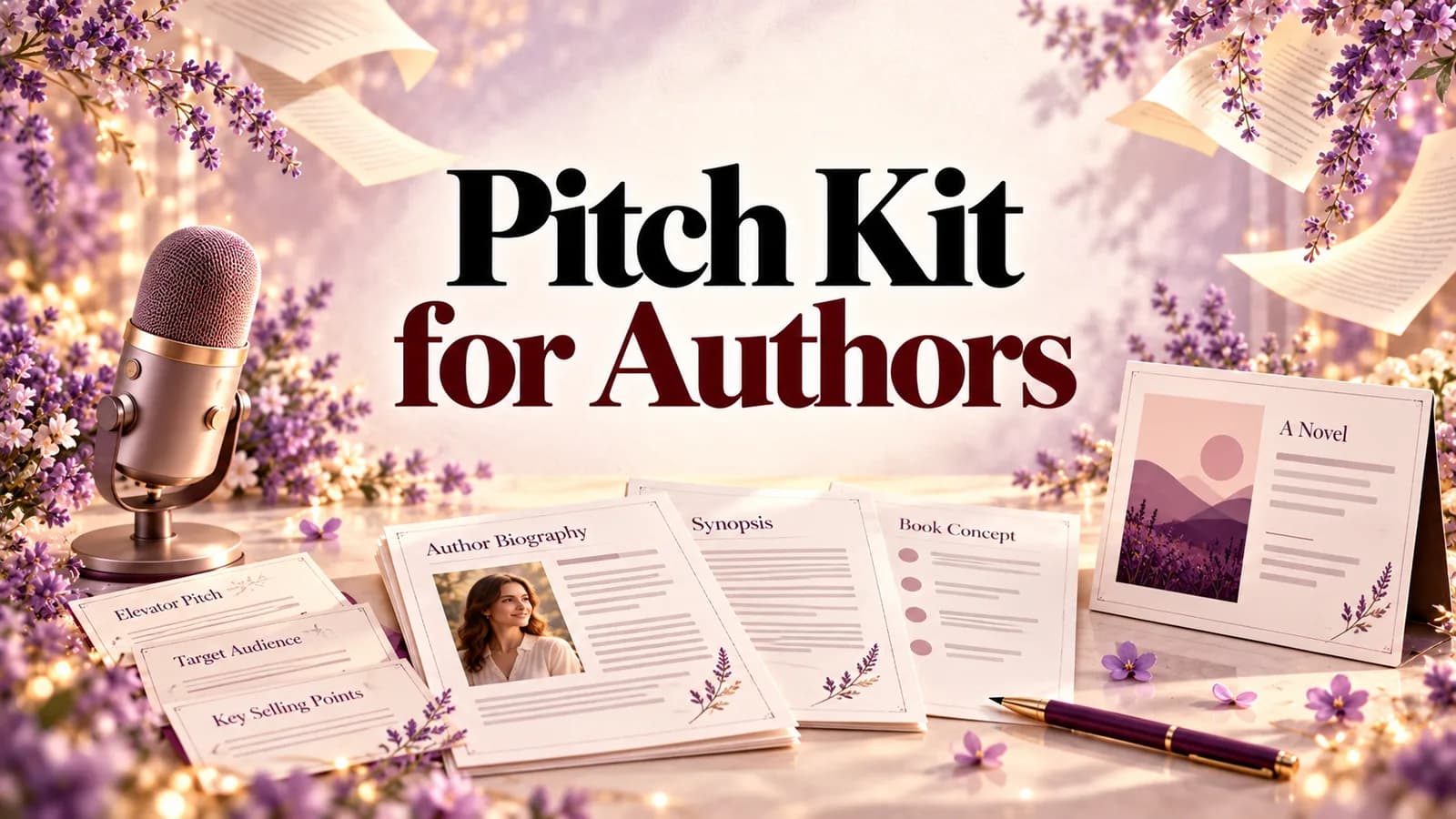
Revise and pitch. Version history, revision intelligence, then Pitch Kit: title, blurb, cover concepts, query letter. Non-fiction authors get a full proposal.
The through-line is a stance: AI suggests options, not decisions. Severity, confidence, uncertainty and effort are all visible, so you can tell the difference between "this is a hard contradiction" and "this might be a pacing issue, we are not sure." An ai story generator that hides its uncertainty is asking for trust it has not earned.
Generation-only versus closed-loop, side by side
| Generation-only AI story generator | StoryWith AI | |
|---|---|---|
| Great at | First 3,000 words, alternate takes, unblocking | The same, plus everything after |
| Knows your book | Only what fits in the window | Persistent bible: characters, world, timeline, themes / subjects, argument map, sources |
| Continuity across 90k words | Statistical, unreliable | Explicit analyzer, findings linked to scenes |
| Unpaid setups | Invisible | Coverage tracking, setup to payoff |
| Output when analysis finishes | A wall of text | One ranked action list |
| Reader validation | None | AI personas plus real readers, then calibrated against each other |
| Non-fiction | Usually an afterthought | First-class: argument map, evidence, citations, proposal |
| Ends at | The draft | The query letter |
A worked example
Take a 92,000-word thriller drafted with heavy AI assistance — a realistic 2026 project. Assume a conservative one contradiction per 4,000 words, which is generous to the machine. That is twenty-three factual conflicts scattered through the manuscript, plus perhaps nine setups introduced and never paid, plus a middle third where six of nineteen scenes change nothing.
None of those thirty-eight problems announces itself. Each one is a single sentence sitting inside a paragraph that reads perfectly well. A human editor charging by the hour will find most of them across two passes and several weeks. The author, rereading, will find maybe a third — because the author's memory silently patches every gap.
Now run the same manuscript through analyzers that compare chapter against chapter mechanically, and the thirty-eight arrive as thirty-eight linked findings, ranked, each pointing at the scene that produced it. The work of fixing them is unchanged and still yours. The work of finding them drops from weeks to minutes. That, and not prose quality, is where the leverage in AI-assisted writing has quietly moved.
The chapter-three checklist for any AI story generator
Whatever tool you use, run this the moment your draft passes about 15,000 words. It catches most of the damage while it is still cheap to fix.
- Freeze your facts. Every physical attribute, name, date and place, written down once, in one place. If your ai story generator cannot store this and read from it, it will contradict you and you will not notice.
- List your open promises. Every question the reader is currently holding. Anything on that list at the end of act two that will not pay off in act three either gets paid or gets cut.
- Interrogate every scene once. What changes? If the honest answer is "nothing, but it is beautiful," it is a candidate for cutting — and beauty is precisely why you will resist.
- Read four consecutive dialogue exchanges aloud. If you can cover the attributions and still tell who is speaking, your voices are distinct. If not, they are not.
- Chart the middle. Tension per scene across the middle third. Flat is fatal; a shallow dip is normal.
You can do all five by hand. It takes a weekend per pass and you will miss things, because you are checking a document you already believe. Automating the checking is the entire argument for a studio over a chat window.
What this means for choosing a tool in 2026
The AI story generator market is currently competing on the wrong axis. Everyone is racing on generation quality — prose fluency, speed, style range — and generation quality is close to solved. The models are good. They will keep getting good.
Nobody is losing manuscripts because the sentences were not fluent enough. They are losing manuscripts to the middle, to the contradictions, to the promise they forgot, to the 60,000-word draft that felt wrong and could not be diagnosed. The competitive frontier moved from can it write to can it see.
So when you evaluate an ai story generator, ask four questions:
- Does it keep state? A persistent bible, or a context window it will eventually fall out of?
- Does it check itself? Can it tell you what is inconsistent in what it just wrote?
- Does it prioritise? Or does it hand you a dashboard and call that insight?
- Does it admit uncertainty? Confidence scores, or verdicts delivered with unearned authority?
Four yeses is rare. It is the specification StoryWith AI was built to.
Frequently Asked Questions (FAQ)
Does StoryWith AI actually generate story text?
Yes — you can start a book AI-assisted, from a blank canvas, or by importing an existing manuscript. Generation is one of three entry points, and it is writer-controlled throughout. What makes it different from a plain ai story generator is that generated text immediately enters the same diagnostic loop as everything else you write.
Why not just use a general chatbot with a long context window?
Because a chat window has no model of your book — no scene list, no character records, no promise ledger, no version history. It regenerates its understanding from scratch every session. That works for three chapters. It does not work for a novel.
Will these problems disappear as models improve?
Fluency will keep improving. Bookkeeping will not improve on its own, because it is not what generation is optimising for. Better models make prettier contradictions.
Does the continuity checker work on writing AI never touched?
Yes. Import from Word, Google Docs, Scrivener, Pages, or plain text, and run the full analysis on a manuscript written entirely by hand. Plenty of authors use it purely as a diagnostic layer.
Is this only for novelists?
No. Non-fiction is first-class, with argument mapping, evidence and counterargument checks, source management and a proposal generator. The failure modes translate directly: an unsupported claim is an unpaid promise.
How many languages does it support?
Ten, including English, Spanish, Japanese, Korean, Simplified and Traditional Chinese, Vietnamese, Thai, Indonesian and Lithuanian.
The last word
An AI story generator is a remarkable instrument for the first three chapters and an unreliable narrator for the next thirty. That is not a flaw to be fixed by better prompting; it is what happens when a system optimised for plausibility is asked to do the work of consistency.
The answer is not to stop generating. It is to stop treating generation as the finish line. Generate freely — then make the machine account for what it produced, in one ranked list, with every issue pointing back to the exact scene that caused it.
That is the half of the loop the market forgot to build. It is the half StoryWith AI is.
See what your manuscript is actually doing — start free at storywith.ai →