Feedback & Revision
BetaBooks Alternatives for Beta Reading (2026)

Memoirist and former hospice chaplain writing about grief, memory, and finding meaning late.
The closest BetaBooks alternative is BetaReader.io: it runs the same private read, adds a public listing where readers can ask to join, and shows a listed price of US$9.99 a month. If you mainly need readers rather than software, a critique community such as Scribophile is the better swap, because it supplies people and BetaBooks mostly does not.
BetaBooks itself is still live as of 21 October 2026, so you may not need to leave at all. Below is what each option does, checked on its own page on 21 October 2026, and how to move a group of readers without losing them.
StoryWith AI is our own product, so weigh what we say about it accordingly.
Key takeaways
- BetaBooks is still running. Its site shows "©2026 BetaBooks, LLC", a free plan, and paid tiers, but the pricing page did not show dollar amounts when we fetched it.
- Only some tools supply readers. BetaReader.io and Scribophile have ways for strangers to find you; Google Docs, BookFunnel and StoryWith AI do not.
- BookFunnel is an ARC delivery tool for review copies, not a beta reading tool. ProWritingAid's beta reader is AI, not people.
- Progress tracking is the feature that separates these tools from a shared document. A reader who stops at chapter seven is telling you something.
- If you switch mid-draft, finish the current round where it is and start the next round on the new tool.
Is BetaBooks still active in 2026?
Yes. The BetaBooks homepage describes itself as "the easiest way to send your manuscript to beta readers" and says the service is run by two people, Pam and Pedro. Readers can leave inline reactions, chapter notes or questionnaire-only responses, and you can see how far each reader has read and when they last opened the book.
The pricing page lists three tiers but showed no prices in the fetched page text, even in the raw HTML. The FAQ says you can pay month to month and put a subscription on hold.
| BetaBooks plan | What the plan adds |
|---|---|
| BetaBooks Free | One book, up to three readers |
| BetaBooks | Inline commenting, questionnaires, unlimited books, up to 20 readers per book, query the Reader Directory |
| BetaBooks Pro | Unlimited readers, collaborator and view-only roles, images, CSV invitation import, automatic reading reminders, reader signup link, embeddable signup form |
Plans as listed on the BetaBooks pricing page on 21 October 2026. No prices were visible in the page text that day.
Outside opinion is mixed on pace rather than quality. In "I looked at every beta reader platform on the market" (The Indie Lab, 11 May 2026), Marcin Pilarczyk, who discloses that he built a competing platform, wrote that "The triage system is genuinely good" and also that "The product is alive but slow-moving." BetaBooks has been covered since at least 2017, when its creator, Andrew, told Kelli Fitzpatrick in an Authors Publish interview that "It gets the chaos out of email" (4 October 2017).
Which BetaBooks alternatives exist, and what do they do?
This table covers each tool we could verify on its own page on 21 October 2026. "Supplies readers" means the tool has some way for readers you do not already know to find your book.
| Tool | Supplies readers? | How readers read | Progress or drop-off tracking | Questions or surveys | Price as listed |
|---|---|---|---|---|---|
| BetaBooks | Partly: Reader Directory on paid plan | Web app, private access you can revoke | How far each reader has read, last opened | Questionnaires on paid plan | Free plan: 1 book, 3 readers. Paid prices not shown |
| BetaReader.io | Partly: Discovery listing, readers request, you approve | Web or iOS and Android apps | Where readers are and how fast they progress | Chapter surveys or a final questionnaire | Free: 1 manuscript, 3 reader slots. Premium US$9.99/month |
| StoryOrigin | Not stated on the feature page; readers apply and you approve | In the browser only | Each reader's progress at a glance | Questionnaires between chapters; feedback unlocks next chapter | Basic free (no beta feedback). Standard $10/month or $100/year |
| Scribophile | Yes: community critiques, Beta Reader Directory on Premium | On the site, posted in parts of about 4,000 words | Detailed reader statistics on Premium | Not listed | Basic free. Premium $15/month |
| Google Docs | No | The shared document, with Commenter access | Not covered on the sharing help page | You write them into the document yourself | Not covered on the help page we checked |
| Wattpad | Yes, a public audience | Public story on Wattpad | Reads, votes and comments per part | Not listed | Not stated on the help page we checked |
| BookFunnel | No | Downloaded review copy (ARC) | Not mentioned | Not mentioned | All plans can deliver ARCs; prices not on the help page |
| ProWritingAid Virtual Beta Reader | No: AI, not people | Upload a manuscript up to 300,000 words | Reports likely drop-off points (AI estimate) | Not applicable | Credits, one report each; prices not on the page |
| StoryWith AI reader sessions | No | In the browser via a private link, no file sent | How far each reader got, where they stopped | Short answer, yes/no, multiple choice, A/B version | Paid plans only: Author $19/month (4 sessions), Pro $39/month (unlimited) |
Features and prices as listed on BetaBooks, BetaReader.io and its pricing page, StoryOrigin beta feedback and StoryOrigin pricing, Scribophile join and karma help, Google Docs sharing help, Wattpad support, BookFunnel ARC help and ProWritingAid Beta Reader on 21 October 2026.
We left out Critique Circle and BookSprout because we could not load a current page of their own showing plans or features on 21 October 2026.
BetaReader.io: the closest like-for-like swap
BetaReader.io does what BetaBooks does and adds a way to be found. Its homepage says that once your book is listed in Discovery, "readers on the platform can request to read it. You approve each request." It also says listing "gives your book visibility, but readers and feedback are not guaranteed."
Readers use a web interface or mobile apps, and reader accounts are free. The free plan holds one manuscript and three reader slots; Premium is listed at US$9.99 a month with no cap on manuscripts or reader slots, and extra team members at US$5.00 per user per month.
One dated caution: the same Indie Lab post (11 May 2026) reported that "The Android app hasn't been updated since April 2022." Ask your readers which device they read on before you choose.
StoryOrigin: good if you already pay for it
StoryOrigin is a book marketing platform with a beta module. Readers view the manuscript only in the browser and "have to leave end-of-chapter feedback to unlock the next chapter," as listed on its feature page on 21 October 2026. Beta copy feedback is part of the Standard plan at $10 a month or $100 a year.
That unlock rule gets you feedback on every chapter, at the cost of readers who would rather read straight through. Pilarczyk (11 May 2026) noted that "Inline comments are capped at 240 characters," which matters if your readers write long notes.
Scribophile: when you need readers, not software
Scribophile is a critique community. "It costs 5 karma points to post a work for critique," and you earn karma by critiquing other members, according to its help page on 21 October 2026. Work longer than about 4,000 words should be posted in parts.
Premium is listed at $15 a month (an annual option advertises "2 months free" but shows no separate price) and adds unlimited posting and access to the Beta Reader Directory for full manuscript exchanges. The trade is time: you read others to be read. For more places to find people, see our guide on where to find beta readers.
Google Docs, Wattpad and the free routes
A shared Google Doc with Commenter access is the zero-setup option. Commenters can view and comment but cannot edit or reshare, per Google's sharing help on 21 October 2026. You get no built-in view of who stopped reading, and comments from ten readers land in one crowded margin.
Wattpad is public. You get reads, votes and comments per part, which is real signal, but the audience is whoever finds the story, not a group you chose. Check your publishing plans before posting a full draft publicly.
BookFunnel and ARC tools are a different job
BookFunnel delivers advance review copies. Its help page says "All BookFunnel plans, including the First-Time Author plan, can deliver ARCs" and also that "The only way that readers can find your book is if you (or someone else) send them the link to it." It does not describe collecting feedback.
Use ARC tools after the book is finished, to gather reviews. Use beta tools while you can still change the book.
Which BetaBooks alternative should you choose?
| If you want | Choose |
|---|---|
| The same workflow, and BetaBooks still works for you | Stay with BetaBooks |
| A similar tool with a public listing and a visible monthly price | BetaReader.io |
| Beta feedback inside a marketing tool you already use | StoryOrigin Standard |
| Readers you do not have yet, and time to trade critiques | Scribophile |
| No cost and no setup, for two or three trusted readers | Google Docs with Commenter access |
| Public reader response to a serialised story | Wattpad |
| Review copies for a finished book | BookFunnel |
| A quick machine read before you send anything to people | ProWritingAid Virtual Beta Reader, or an AI first pass |
| Excerpt-level sessions with A/B questions and drop-off, alongside manuscript analysis | StoryWith AI |
Based on features as listed on each vendor's page on 21 October 2026.
Staying is a fair answer. If your readers already have accounts, your triage habits work, and the reader limit fits, a switch costs you more than it saves.
What should you check before moving readers mid-draft?
Moving readers is where rounds get lost. Check these before you send a new link:
- Export what you have. Get the current round's comments out of the old tool first, in whatever form it offers, and keep them with the draft version they refer to.
- Finish the round where it started. Readers halfway through a book rarely restart elsewhere. Open the new tool for the next round only.
- Match the reading device. If most readers read on a phone, confirm the new tool works there before you invite them.
- Count the accounts. Some tools need a reader account, some only a link. Every extra signup step loses someone.
- Keep the questions identical. If you want to compare rounds, reuse the same questionnaire. Our beta reader questionnaire has a starting set.
- Tell readers why. One short note explaining the move and the new deadline does more than a reminder email later.
Hypothetical example: an author with eight readers on chapter twelve of BetaBooks lets them finish there, exports the notes, then opens round two on the new tool with the same six questions. Nobody restarts, and the two rounds stay comparable.
When notes from the two rounds disagree, our piece on conflicting beta reader feedback covers how to weigh them.
Where StoryWith AI fits
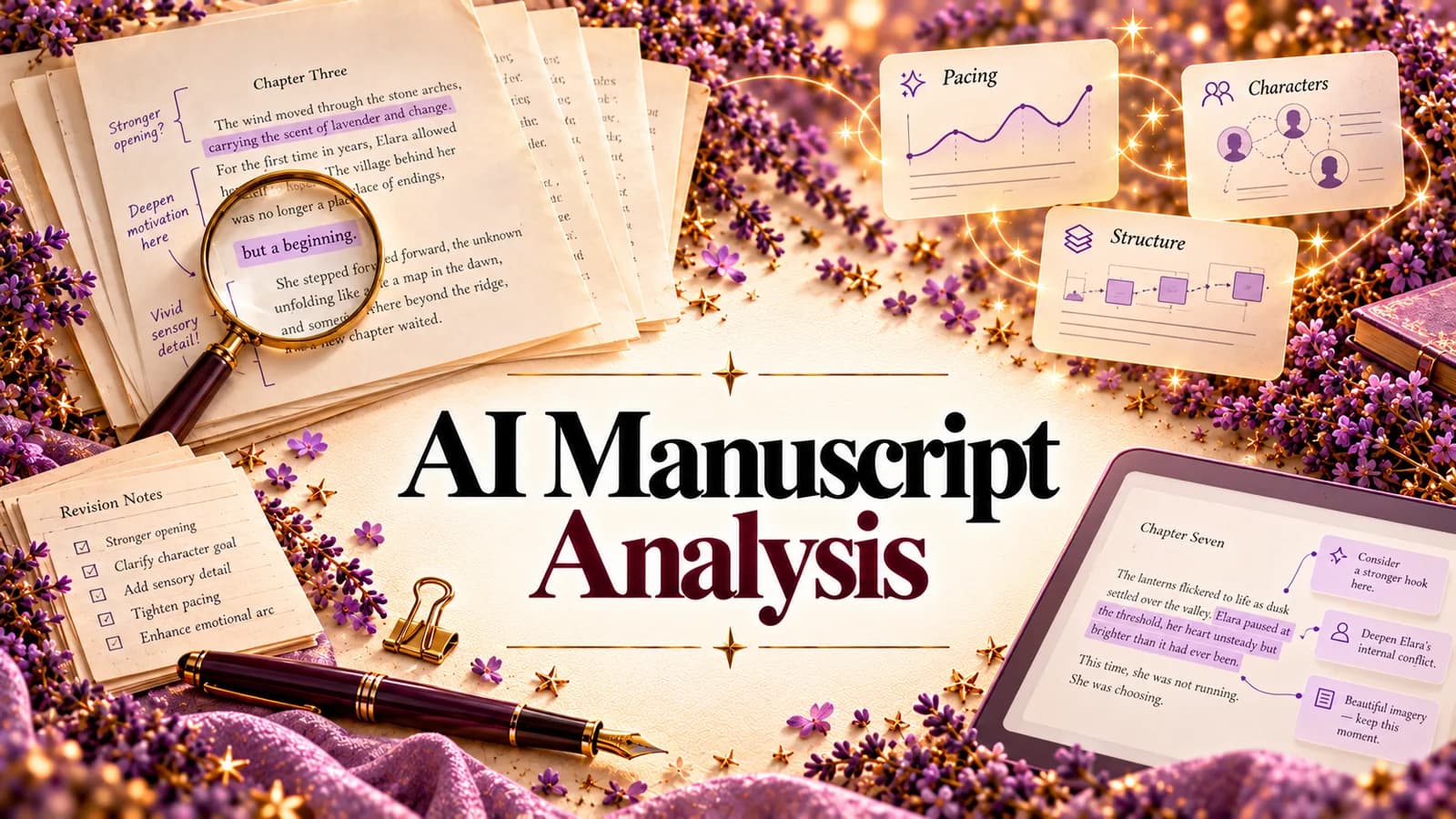
StoryWith AI is AI manuscript analysis plus reader feedback sessions. You choose excerpts (a scene, a chapter or several), add your own questions, set 3 to 20 responses, and send a private link. Readers read in the browser, and you see how far each one got and where they stopped. Before that, you can test a chapter on three to five simulated AI reader personas; that is a first pass, not evidence of real readers.
Sessions are on paid plans only: Author is $19 a month or $149 a year with 4 sessions a month (plus 1 with yearly), and Pro is $39 a month or $299 a year with unlimited sessions. The same plans include the analyzers that rank what to fix in the manuscript.
It is the wrong tool if you need readers supplied: StoryWith AI does not provide them, so Scribophile or BetaReader.io's Discovery listing is the better fit. It is also more than you need if you just want a whole manuscript read by three friends, where BetaBooks' free plan or a Google Doc does the job. If budget is the question, our note on what beta readers cost sets out the paid and free routes.
Frequently Asked Questions (FAQ)
Is BetaBooks shut down?
No. As of 21 October 2026, the BetaBooks site is live, shows "©2026 BetaBooks, LLC", and offers a free plan with one book and up to three readers. Its pricing page listed paid tiers but no visible prices in the page text that day.
What is the best free BetaBooks alternative?
For a small trusted group, a Google Doc shared with Commenter access costs nothing extra and needs no reader accounts. If you want reading progress, BetaReader.io's free plan (one manuscript, three reader slots, as listed on 21 October 2026) is the closest free match.
Is BetaReader.io a good BetaBooks alternative?
It is the closest match in workflow, with surveys, inline comments and reading analytics, plus a Discovery listing where readers can request your book. Premium is listed at US$9.99 a month. A May 2026 review noted its Android app had not been updated since April 2022, so check your readers' devices.
Which beta reader platforms supply readers?
Scribophile supplies them through its critique community and a Beta Reader Directory on Premium. BetaReader.io lets readers request your book through Discovery, without a guarantee. BetaBooks offers a Reader Directory on its paid plan. Google Docs, BookFunnel and StoryWith AI do not supply readers.
Is BookFunnel a beta reader platform?
No. BookFunnel delivers advance review copies of a finished book, and its help page says readers can only find your book if you send them the link. It does not describe collecting feedback, so it suits a launch, not a revision round.
Can an AI beta reader replace BetaBooks?
No. ProWritingAid's own page says its AI beta reader "is not meant to replace a human beta reader or developmental editor." AI readers, including StoryWith AI's simulated personas, are a first pass to run before real people read.
Should I switch beta reading tools in the middle of a round?
Usually not. Let readers finish where they started, export their notes, and open the next round on the new tool with the same questions, so the two rounds can be compared.